

The Hidden Cost of Dormant Members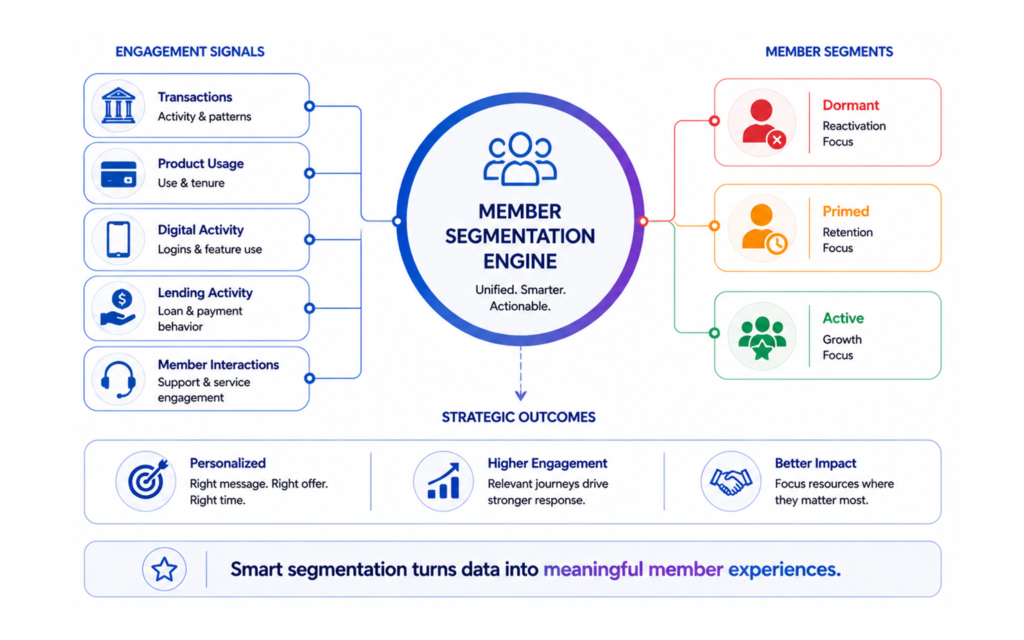
Effective Credit Union Growth Strategies often focus on acquiring new members, launching products, or expanding lending portfolios. Yet one of the largest growth opportunities already exists within most institutions: dormant and underutilised members.
A dormant account is typically defined as an account with no meaningful activity for a specified period, often 12 months. While these accounts appear as compliance items on operational reports, they often represent something far more significant: paused relationships, lost deposits, and missed lending opportunities.
Industry observations suggest that 20 to 25% of a typical membership base may fall into inactive or low engagement categories. That represents thousands of members who still trust the institution enough to maintain an account but are no longer actively using it.
The impact extends beyond growth.
Under state unclaimed property laws and evolving NCUA Compliance Requirements, prolonged inactivity can eventually lead to escheatment obligations, monitoring requirements, and additional fraud controls. Dormancy therefore creates both a business challenge and a compliance responsibility.
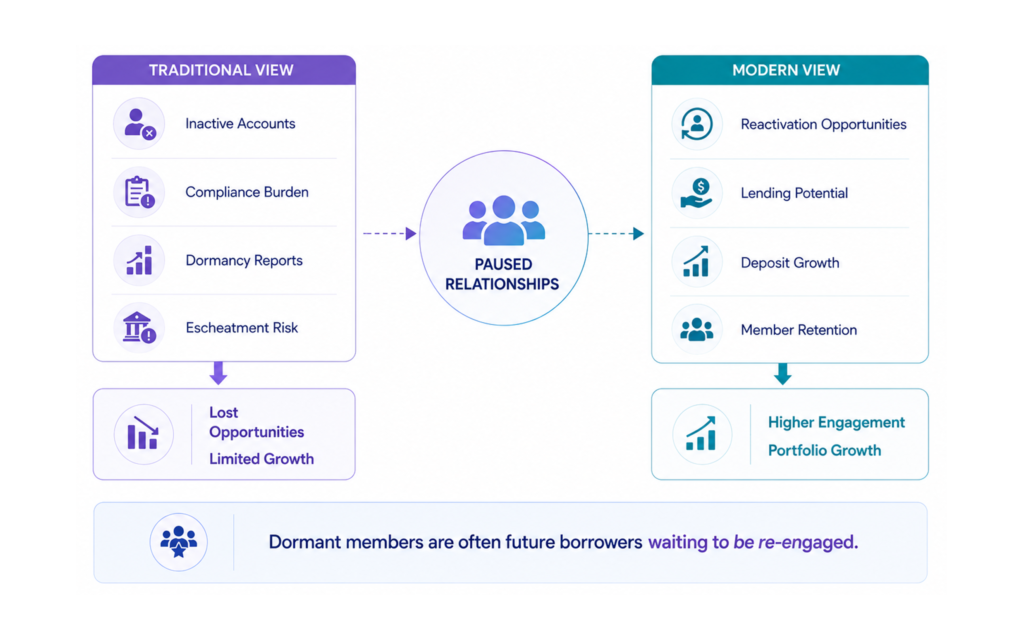
The most successful credit unions are beginning to view dormant members differently. Instead of treating them as lost relationships, they see them as paused journeys that can be reactivated through intelligent engagement.
Why Manual Dormancy Management No Longer Works
Most institutions recognise the need to engage inactive members.
The challenge lies in how they do it.
Traditional Dormant Account Management often relies on spreadsheets, periodic reporting, and manual outreach campaigns. Staff extract dormant account lists, clean the data, coordinate outreach, and attempt to track responses across multiple systems.
The process is slow, fragmented, and difficult to scale.
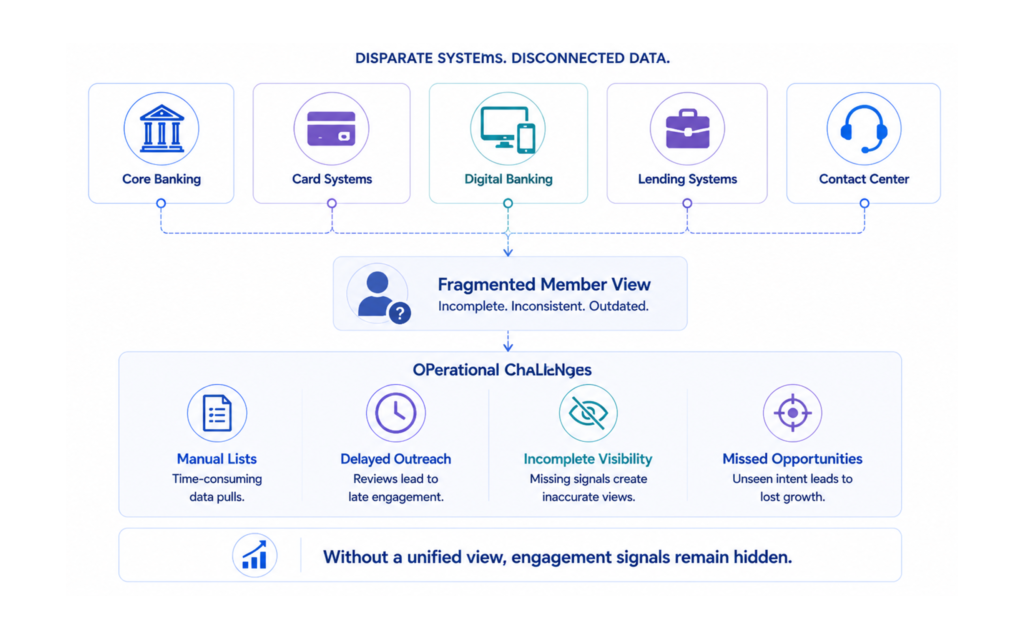
At the same time, valuable engagement signals remain scattered across:
- Core banking platforms
- Card systems
- Digital banking channels
- Lending systems
- Contact centre interactions
Without a unified view, institutions struggle to understand whether a member is truly inactive or simply engaging through a different channel.
This creates a larger problem.
Dormancy is often a leading indicator of member attrition. Reduced transactions, declining product usage, and fewer interactions frequently appear long before a member formally becomes dormant. By the time inactivity thresholds are reached, the relationship may already be weakening.
The opportunity is to identify those signals earlier and act before disengagement becomes permanent.
From Dormancy Tracking to Member Churn Prevention
Traditional dormancy programmes focus on identifying inactive accounts.
Modern programmes focus on understanding behaviour.
This is where Member Churn Analysis becomes essential.
Rather than treating all inactive members the same, leading credit unions segment members based on engagement patterns, product relationships, and behavioural signals.
A practical framework typically includes three groups:
Dormant Members
Members with little or no meaningful activity over a defined period.
These accounts often carry compliance obligations but also represent immediate reactivation opportunities.
Primed Members
Members showing declining engagement but not yet dormant.
They may still maintain balances or occasional activity, making them highly responsive to targeted outreach.
Active Members
Members with multiple products, regular engagement, and strong wallet share.
These relationships often provide the greatest opportunities for cross sell and long term growth.
This segmentation transforms Dormant Account Management from a reporting exercise into a strategic growth initiative.
Instead of sending the same message to every member, institutions can deliver targeted engagement journeys based on actual behaviour.
Building an Automated Member Re-engagement Strategy
Once segmentation is established, the next step is execution.
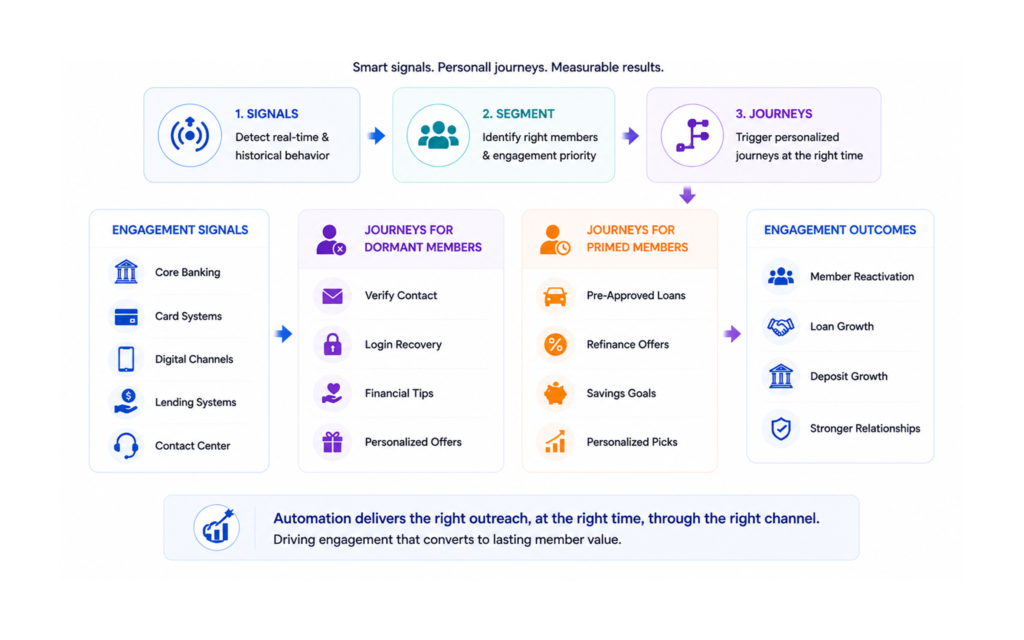
The most effective Automated Member Re-engagement programmes do not rely on one time campaigns. They use structured journeys that adapt to member behaviour and trigger actions automatically.
Re-engaging Dormant Members
For fully dormant members, a structured journey may include:
- Contact verification
- Digital banking reactivation
- Financial wellness outreach
- Login recovery assistance
- Product recommendations based on historical relationships
The objective is not simply account activity.
It is rebuilding engagement.
Re-engaging Primed Members
Primed members require a different approach.
Because they still demonstrate some level of engagement, outreach can focus on relevance rather than reactivation.
Examples include:
- Pre approved loan offers
- Auto refinance opportunities
- Savings goals
- Credit building products
- Personalised financial recommendations
Behaviour based outreach consistently performs better than generic campaigns because it aligns with member needs rather than organisational priorities.
Why Automation Matters
Automation allows these journeys to operate continuously rather than periodically.
Instead of waiting for monthly reports, institutions can trigger engagement based on real time behaviour, ensuring members receive the right message at the right moment.
This creates a more scalable and effective model for long term member engagement.
Staying Ahead of NCUA Compliance Requirements
Growth and compliance should not operate independently.
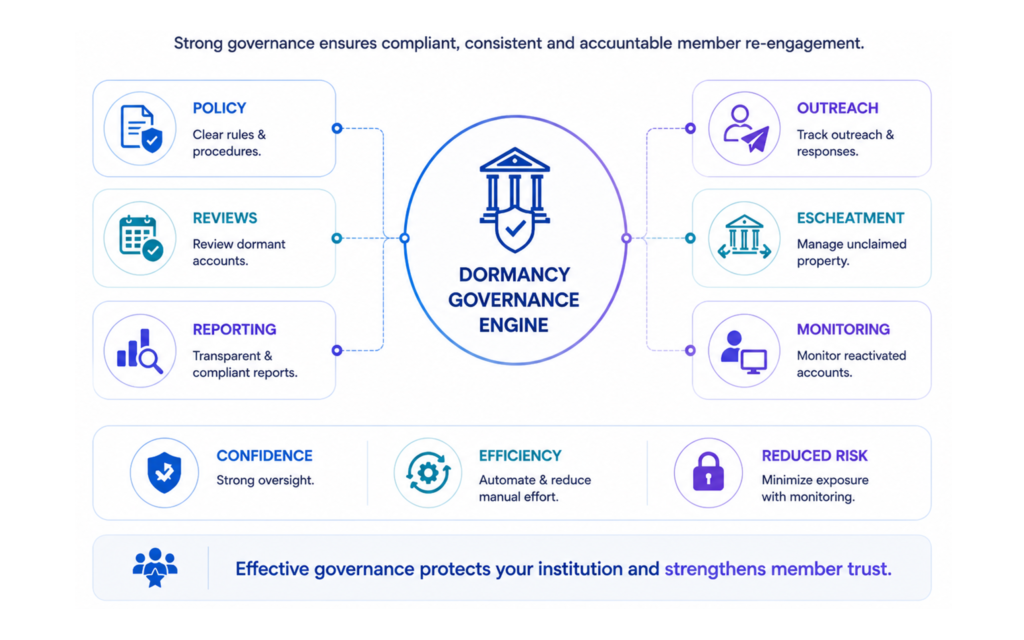
Successful re-engagement programmes are built with governance at their core.
NCUA Compliance Requirements and state unclaimed property laws require credit unions to maintain clear dormancy policies, monitor inactive accounts, document outreach efforts, and manage escheatment obligations appropriately.
Key controls include:
- Written dormancy policies
- Periodic dormant account reviews
- Audit ready reporting
- Segregation of duties
- Monitoring of reopened accounts
- Documented outreach activities
When these controls are embedded within automated workflows, institutions gain both operational efficiency and regulatory confidence.
Instead of relying on spreadsheets and manual tracking, compliance becomes part of the engagement process itself.
Turning Engagement Data Into Growth
One of the most overlooked aspects of re-engagement is measurement.
Without clear visibility, it is difficult to understand whether programmes are driving meaningful outcomes.
Modern dashboards should track:
- Dormant, primed, and active member populations
- Reactivation rates
- Product adoption rates
- Deposit growth
- Loan growth
- Engagement movement between segments
These metrics help institutions quantify the impact of Automated Member Re-engagement initiatives and connect engagement efforts directly to business performance.
Even modest improvements can create significant results.
A small reduction in dormancy rates across a large membership base can unlock additional deposits, lending opportunities, and deeper member relationships without the acquisition costs associated with attracting new members.
This is where Member Churn Analysis becomes particularly valuable. By understanding which behaviours precede disengagement, credit unions can intervene earlier and preserve relationships before they deteriorate.
Leveraging ezee.ai for Member Reactivation
When a no code, AI enabled platform overlays existing systems, execution becomes achievable without requiring core replacement.
lend.ezee Quick Launch
lend.ezee enables modern lending workflows and decision automation that help credit unions convert dormant and primed members into active borrowers.
Institutions can:
- Launch pre approved loan and refinance journeys
- Trigger lending offers based on engagement behaviour
- Connect member reactivation directly to lending growth
- Reduce deployment timelines through configurable workflows
This helps transform Automated Member Re-engagement from a marketing initiative into a measurable growth programme.
decision.ezee Triggers
decision.ezee enables credit unions to configure eligibility criteria, offer logic, and decision rules without extensive development effort.
For dormancy and reactivation programmes, this supports:
- Segment specific offers
- Risk aligned personalisation
- Faster approvals
- Consistent policy execution
All while maintaining governance standards and alignment with NCUA Compliance Requirements.
Connecting Engagement to Growth
The real value emerges when engagement, lending, and decisioning operate together.
By integrating with existing core and lending systems, credit unions can centralise engagement efforts, automate member journeys, and deliver more consistent experiences across channels. The result is better visibility into member behaviour, faster intervention opportunities, and a more proactive approach to relationship growth.
Reimagining Dormant Accounts as Growth Opportunities
Dormant accounts will always exist to some degree.
The difference lies in how institutions respond to them.
Traditional approaches view dormancy as a compliance obligation. Modern Credit Union Growth Strategies view it as a growth opportunity.
Achieving that shift requires more than outreach campaigns. It requires the ability to identify behavioural signals, automate engagement journeys, apply decision logic consistently, and measure outcomes continuously.
The credit unions that succeed over the next decade will not simply acquire more members. They will engage more of the members they already have. Because the greatest growth opportunity is often not outside the institution.
It is sitting quietly inside the dormant accounts that have yet to be reactivated.
Frequently Asked Questions
Dormant accounts quietly drag loan growth and lifetime value because “members” on paper aren’t actually borrowing, transacting, or referring. They inflate membership metrics, mask churn, and hide cross-sell gaps. For example, 20–40% of credit union memberships are functionally inactive on digital channels, diluting true growth signals.
The most effective reactivation strategies treat dormancy as a data and journey problem, not a one-off campaign. Use behavioral triggers (logins, salary credits, card usage), personalized offers (refinance, top-up loans), and education nudges to restart activity. Re-engaging an existing member is up to five times cheaper than acquiring a new one.
Spreadsheet-based outreach fails because it can’t keep pace with member behavior, channel preferences, or compliance tracking. Lists are outdated the moment they’re pulled, segmentation is static, and follow-ups aren’t logged reliably. That means missed refinance opportunities, inconsistent disclosures, and no auditable view of who received which offer, when.
Credit unions should segment inactive members by life stage, product mix, and recent behaviors, then align each segment to a specific lending objective. For example, group members with prior auto loans and recent credit-bureau inquiries into an auto-refinance list, and dormant salary-credit accounts into pre-approved personal-loan or overdraft offers.
Data silos hide signals that a “silent” member is actually credit-active elsewhere and ready for a fresh offer. When core banking, cards, digital channels, and bureau pulls sit in separate systems, you can’t see patterns like declining logins plus increased external borrowing—classic early-warning signs for churn and refinance opportunities.
The most useful KPIs focus on engagement converted into lending, not just clicks. Track reactivated accounts, new loans from previously dormant members, activation-to-loan conversion rate, and incremental loan balances. Collections and risk teams also watch early-delinquency on these loans to confirm that growth is sustainable, not just volume for volume’s sake.
Digital automation lets branches work from prioritized, pre-qualified queues instead of cold lists. Central systems can score dormancy, pull recent bureau data, and pre-populate scripts, so frontline staff call members with specific refinance, top-up, or limit-increase offers. This typically increases campaign productivity and frees branch teams from manual list-building.
A good fit is a platform that can read your core and digital data daily, segment members, and trigger compliant, multi-channel journeys without custom code. Look for: dynamic dormancy scoring, bureau/KYC integrations, no-code journey design, consent and opt-out tracking, and clear lift in reactivated balances versus control groups.
Reactivation campaigns must respect consent, fair-treatment, and AML/KYC expectations just like any other product outreach. That means honoring marketing opt-outs, avoiding unfair steering, and ensuring KYC/CKYC and sanctions checks are refreshed where required. Regulators increasingly expect documented controls around who you target, why, and how you monitor resulting accounts for AML risk.
No-code tools sit on top of your existing core and LOS, orchestrating data and journeys without changing underlying systems. Product and risk teams can configure rules like “dormant 12+ months, good bureau score, prior auto loan” and automatically trigger pre-approved offers via SMS, email, or contact-center tasks.